Serving San Francisco, CA and surrounding areas. (628) 895-9470
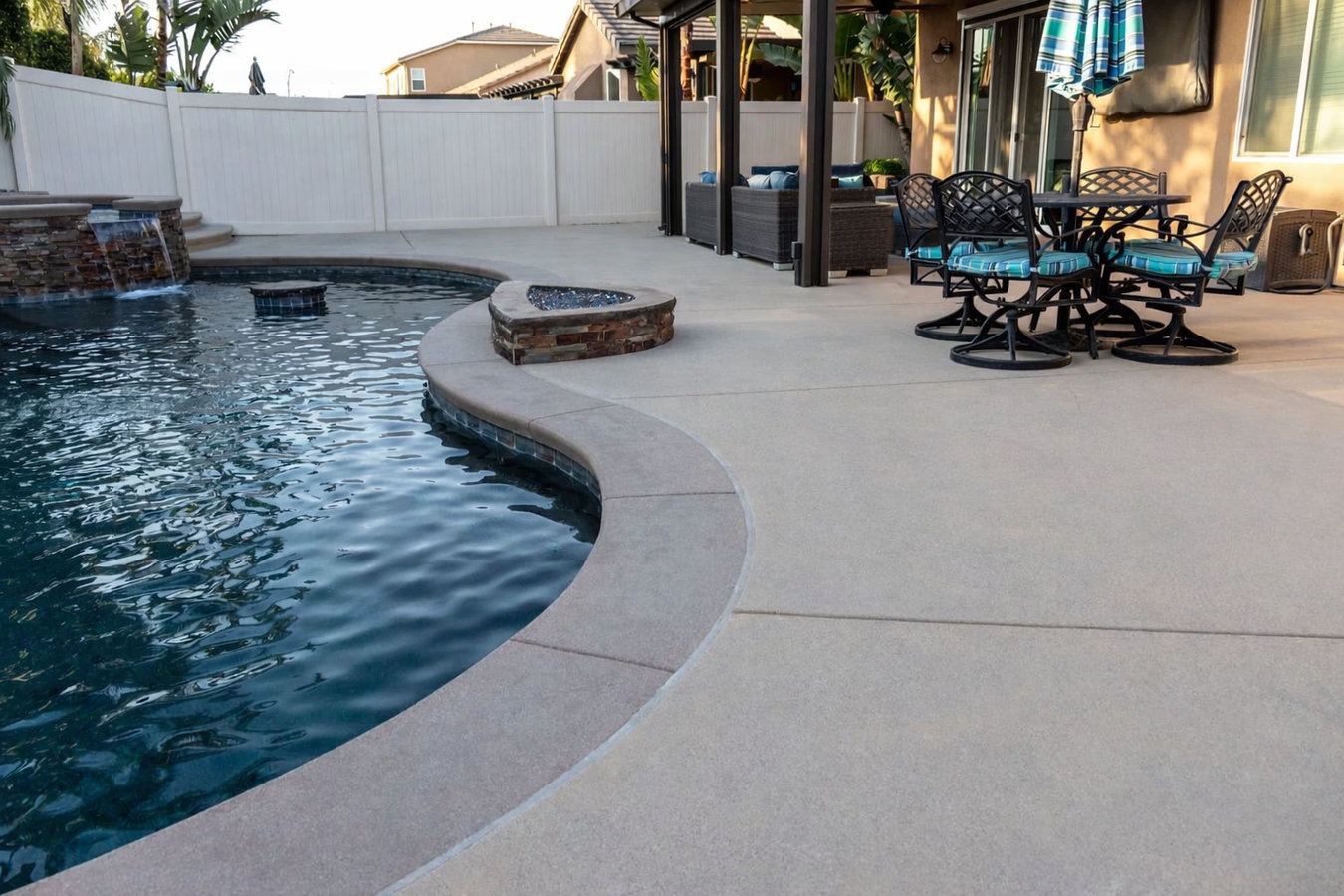
A pool deck that puddles, cracks, or turns slippery is a safety problem. We design and pour concrete pool decks built for San Francisco's damp climate - with the right finish, drainage, and seal to last.
Concrete pool decks in San Francisco start with removing the existing surface, grading the ground so water drains away from the pool, and pouring a textured slab that handles bare feet safely when wet. Most residential pool deck projects take two to four days of active work, with a curing period of roughly one week before light use.
San Francisco homeowners often find their existing decks have cracked from the clay soils shifting beneath them, or that the surface has turned slippery from years of fog and pool splashing. Neither problem goes away on its own. A new concrete pool deck - planned with the right drainage slope and a non-slip finish - fixes both issues at once. If you want something beyond plain concrete, our concrete patio construction work covers adjacent outdoor areas that can be designed to match the deck.
The National Safety Council consistently lists pool areas among the most common locations for slip-and-fall injuries, which is why surface texture and drainage are the first design decisions - not the last.
Cracks that are widening or have a step where one side sits higher than the other are a sign the base underneath has shifted. In San Francisco, clay soils that swell when wet and shrink when dry are a common cause of this movement. Small hairline cracks can sometimes be patched, but a network of spreading cracks usually means the deck needs replacement rather than repair.
After rain or heavy splashing, water should run off the deck toward a drain or the yard. If puddles sit on the surface for hours, the deck has settled unevenly or was never graded correctly. Standing water is a slip hazard and, in San Francisco's damp climate, it accelerates the breakdown of the concrete surface over time.
If the deck feels glassy underfoot when wet, the texture has worn down to where it no longer provides safe footing. This is especially common on older smooth-finish decks that were never textured to begin with. A new deck or resurfacing with a proper non-slip finish solves this directly.
The coping is the cap that runs along the pool edge where the deck meets the water. If a gap is opening between the deck and the coping, or if the coping is lifting, the deck has moved. This lets water get underneath the slab, which speeds up further damage and can eventually affect the pool structure. This repair should not be put off.
Every pool deck project starts with a site visit. We assess the existing surface, the drainage slope, and the base condition before recommending new construction or resurfacing. If the base is solid and the damage is surface-level, resurfacing can save money without cutting corners. If the base has shifted or crumbled, a full replacement is the right call - and we will tell you honestly which applies to your deck.
For homeowners who want to extend the project beyond the pool area, we connect the deck seamlessly to concrete steps construction and concrete patio construction so the whole outdoor space works together. One contractor, one timeline, one permit process.
Suits homeowners with a cracked, settled, or completely absent deck surface around an existing pool.
Suits homeowners whose existing deck is structurally sound but faded, stained, or lightly cracked.
Suits anyone who wants a naturally textured, slip-resistant surface that handles SF's wet conditions without extra maintenance.
Suits homeowners who want a decorative look around the pool and are willing to reseal on a regular schedule.
San Francisco's marine layer keeps pool deck surfaces damp far more often than in sunnier parts of California. A deck that was not sealed properly - or that has lost its sealer over the years - absorbs moisture that works into the concrete from the inside. That moisture softens the surface, contributes to cracking, and makes the deck more slippery after every foggy night. Choosing a penetrating sealer and committing to resealing every two to three years is not optional in this climate - it is what separates a deck that lasts from one that deteriorates within a few seasons. Homeowners across San Francisco, from Noe Valley to the Sunset, deal with this same issue.
The city's clay-heavy soils add a second layer of complexity. Clay expands when it absorbs rain and contracts when it dries out, and that repeated movement puts stress on concrete slabs from below. A contractor who accounts for local soil conditions during base preparation - with proper compaction and, in some cases, a thicker base layer - gives the slab the support it needs to stay level over time. We serve homeowners throughout San Francisco and nearby communities, including Daly City and San Mateo, where many of the same soil and moisture conditions apply.
Reach out by phone or through our contact form and we will schedule an on-site visit. We will not quote a price over the phone - pool deck projects depend on seeing the space, the base condition, and your site access. You will get a written estimate within one business day of the visit.
Most pool deck projects in San Francisco require a building permit. We handle the application from start to finish. Plan for several weeks of review time - we keep you updated so there are no surprises.
Once the permit is approved, the crew removes the old surface, grades the ground for drainage, compacts the base, and pours the concrete. Decorative finishes like stamping or exposed aggregate are completed the same day as the pour.
The concrete needs about a week before light foot traffic. Once cured, we apply a protective sealer and walk through the finished deck with you - covering care instructions, reseal schedule, and what to watch for in the first year.
Free on-site estimate. We handle permits. No obligation to book after we visit.
(628) 895-9470Every pool deck we build in San Francisco is designed with the marine layer in mind. That means a textured non-slip surface, a drainage slope away from the pool edge, and a sealer applied before we leave. You are not getting a generic slab finished to look good in photos - you are getting a deck engineered for a climate that keeps everything damp most of the year.
San Francisco's permit process is thorough and can take several weeks. We handle the application, coordinate with the city, and keep you informed at every step. You do not have to visit the permit office or wonder whether the work is legal. The permit is pulled before a single tool comes out of the truck.
Clay soils across San Francisco expand and contract with the seasons, and that movement is a leading cause of premature deck cracking. We account for local soil conditions during base prep - adding proper compaction and, where needed, a heavier base - so your deck has the structural support to stay level for years rather than just seasons. The American Concrete Institute's guidance on concrete base preparation standards informs how we approach every pour.
Every contractor working on your property in California must hold a current state license from the California Contractors State License Board. Ours is current and verifiable. That means the work is backed by insurance, the permit is legal, and you are protected if anything goes wrong during the project.
Every pool deck project we complete is permitted, built on a properly prepared base, and finished with safety and durability in mind - the same standard any reputable concrete pool decks contractor should follow. That combination is what keeps San Francisco homeowners off the phone with a repair contractor two years later.
Add or replace concrete steps that connect your pool deck to the rest of your yard or home entry.
Learn MoreExtend the outdoor living area beyond the pool with a properly graded concrete patio designed to complement your deck.
Learn MorePermit season fills quickly - reach out now to lock in your project start date before summer.