Serving San Francisco, CA and surrounding areas. (628) 895-9470
Old, cracked, or moisture-damaged floors hold your basement, garage, or living space back. We install concrete floors in San Francisco with proper moisture barriers, seismic control joints, and permit handling - so the floor works for decades, not years.
Concrete floor installation in San Francisco involves removing the existing floor surface, preparing and compacting the base, placing a moisture barrier, and pouring and finishing a new slab - most jobs take one to three days of active work, with the full project timeline extending to four to six weeks when permit approval is factored in.
San Francisco homeowners pursue new concrete floors for a wide range of reasons - replacing a failing slab in an older home, upgrading a garage ahead of an ADU conversion, or finishing a basement into livable space. Whatever the reason, the quality of the project comes down to what happens before the pour: base compaction, moisture barrier placement, and control joint planning. In a city where ground moisture is persistent year-round and minor seismic movement is a background fact of life, these steps are not optional. If your project connects to a covered outdoor space, we also handle garage floor concrete as a related service with the same standards applied.
San Francisco's Department of Building Inspection requires permits for most concrete floor work involving structural changes or new slabs. We handle the permit application and inspector coordination from start to finish so you do not have to navigate that process on your own.
If you have patched cracks in your concrete floor and they keep reappearing - especially after wet winters or dry summers - the underlying slab may be failing rather than just aging. In San Francisco, soil movement from seismic activity and seasonal moisture changes can stress a slab beyond what patching can fix. When cracks are wider than a quarter-inch or running in multiple directions, replacement is usually the more cost-effective long-term answer.
Walk across your floor and listen for a hollow sound when you tap it, or notice if certain areas feel slightly springy underfoot. This often means the soil underneath has shifted or settled - something that happens in older San Francisco homes where the original base was not compacted to modern standards. A floor that moves or sounds hollow is a safety concern and will not improve on its own.
If you notice white powdery deposits on your floor, damp spots that appear after rain, or flooring materials like tile or wood that keep lifting or warping, moisture is likely migrating up through the slab. This is especially common in ground-level San Francisco homes built without a moisture barrier. A new floor with proper protection underneath solves the problem at the source.
San Francisco homeowners increasingly convert garages and basements into living space - an ADU, a home office, or an extra bedroom. If the existing concrete in that space is old, stained, or uneven, installing a new floor is usually the first step before any other work begins. A fresh slab gives you a clean, level surface that meets current building standards.
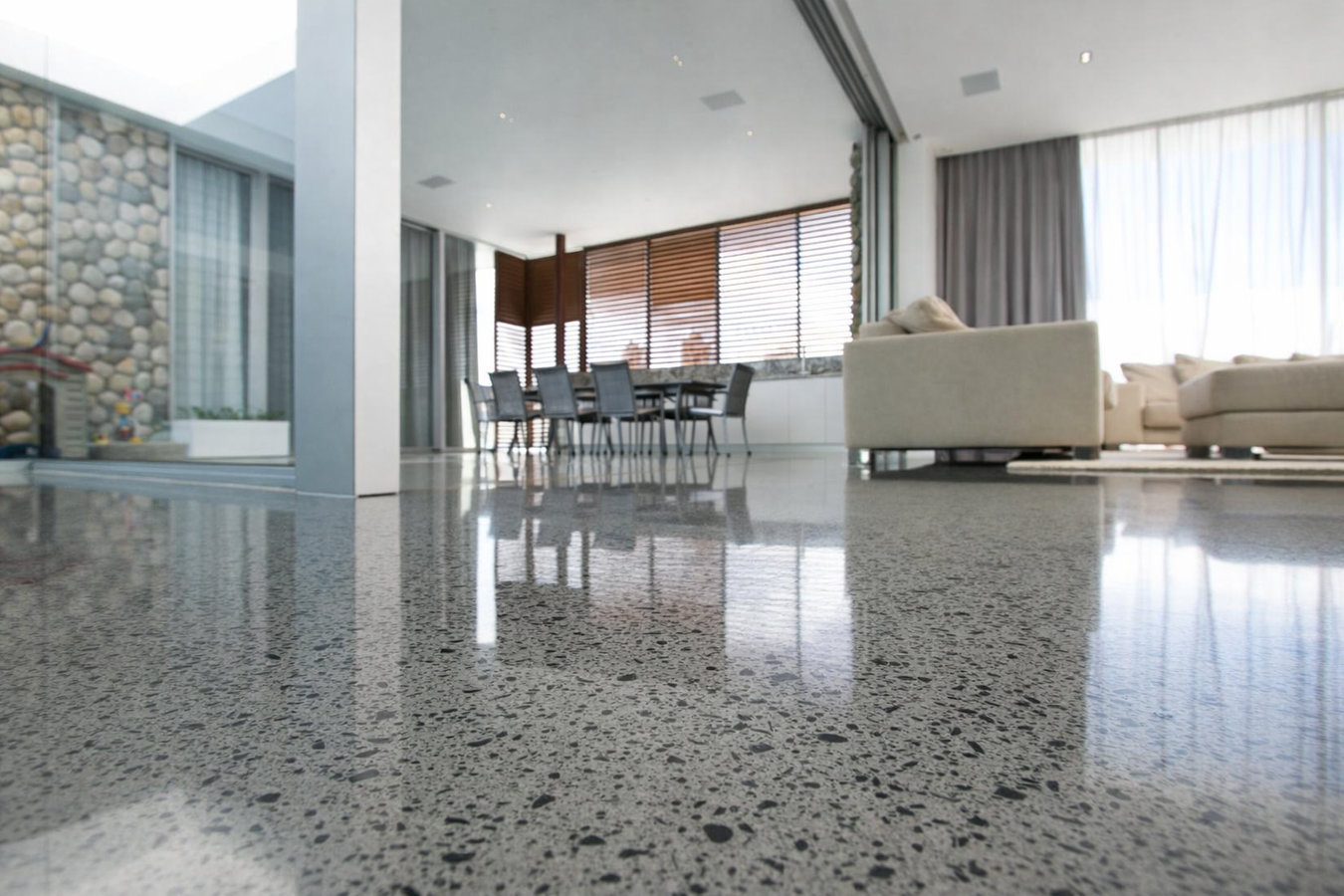
We install concrete floors in residential spaces across San Francisco - basements, garages, ground-level living areas, and covered patios. Every installation includes full demo and haul-away of the existing surface, base grading and compaction, moisture barrier placement, concrete forming, pouring and finishing, and control joint cutting. The finish can be a standard broom texture, a smooth trowel finish, or a polished surface depending on what the space is used for. If the floor is part of a larger outdoor project that includes a pool surround, we also handle concrete pool decks so both surfaces are designed and poured to the same standard.
For San Francisco garage conversions and basement ADU projects, we understand that the concrete floor is usually the first trade in. We sequence our work to align with the overall project schedule so later contractors - framers, electricians, and plumbers - can follow without delays. The San Francisco Planning Department ADU program has specific requirements for garage-to-living-space conversions, and we are familiar with how concrete floor work fits into those requirements. We also coordinate with the Department of Building Inspection on all permit submissions.
Suits homeowners replacing a failing or aging concrete floor in a basement, garage, or ground-level room.
For San Francisco homeowners converting a garage into permitted living space - sequenced to support the broader ADU project timeline.
Suits living areas, studios, or commercial spaces where the floor finish is visible and part of the design.
For homeowners who want a warm floor - heating tubes embedded in the slab before the pour, planned from the start.
San Francisco's fog and damp climate make moisture management a non-negotiable part of every concrete floor project. The city consistently ranks among the wettest urban environments in the western United States during winter, and ground-level or below-grade slabs are under constant pressure from soil moisture year-round. A moisture barrier under the slab is the primary defense - and it has to be installed correctly before the pour, not added afterward. San Francisco also sits near active fault lines, which means slabs here benefit from properly spaced control joints that give the concrete room to flex without splitting randomly. The Portland Cement Association provides the technical standards we follow for vapor retarder placement and curing practices.
A large share of San Francisco homes were built before 1950, and older properties regularly turn up surprises once the floor is opened - drainage pipes that do not meet current standards, soil that was never properly compacted, or a slab poured much thinner than what is used today. Contractors who have worked extensively in the city's older neighborhoods know what to look for and can give you a more accurate estimate after seeing the space in person. Homeowners in nearby San Mateo and South San Francisco face many of the same conditions - older housing stock, damp soil, and permit processes that reward contractors who know the local system. We work across all of these jurisdictions and handle permits in each one.
We respond within 1 business day. We will ask about the size of the space, what is currently on the floor, and what you want the finished surface to look like. No charge, no obligation at this stage.
We visit the space to check the existing floor, assess moisture conditions, and look at the base underneath. Older San Francisco homes sometimes reveal issues below the current floor that affect cost and timeline - this visit is how we give you a written estimate you can actually rely on.
If your project requires a permit from the San Francisco Department of Building Inspection - common for structural work or ADU conversions - we submit the application and track approval. This typically adds a few weeks before the crew can start. Once the permit is in hand, we confirm your start dates.
The crew removes the old floor, preps the base, lays the moisture barrier, and pours the slab - usually in one to three days of active work. After the concrete hardens, your contractor walks you through care instructions, including when to apply a sealer. If a city inspection is required, it happens before the final walkthrough.
Free on-site estimates. We handle permits, moisture barriers, and seismic control joints. Respond within 1 business day.
(628) 895-9470We install a vapor barrier under every slab we pour - it is standard practice, not an upgrade. In San Francisco's damp climate, skipping this step is the most common reason floors fail within a few years. We do not give you the option to skip it because it is not in your interest.
The Bay Area is seismically active, and a concrete floor poured without planned control joints will crack randomly when the ground moves. We design joint placement into every pour so the floor has room to flex without splitting. The American Concrete Institute sets the standards we build to.
San Francisco's Department of Building Inspection has detailed requirements for residential concrete work, and the permitting process here moves more slowly than in surrounding cities. We submit complete applications the first time and track approval so your project does not stall mid-process.
More than half of San Francisco's homes were built before 1950. Opening up a floor in a pre-war home regularly reveals conditions that affect cost and timeline. We have seen those conditions across the city's neighborhoods and give you a written estimate that accounts for what we actually find, not just what we hope is there.
A concrete floor is one of those projects where the invisible steps - moisture protection, base prep, joint design - determine whether the floor looks the same in ten years or starts failing in two. We bring the local knowledge and the right process to get it right the first time. California Contractors State License Board verification confirms our license is current before you commit to any project.
Outdoor slab surfaces around pools require the same moisture management and finish quality we apply to interior floors.
Learn MoreGarage slabs have their own demands - vehicle loads, oil resistance, and drainage - handled with the same process and permit coordination.
Learn MoreSan Francisco permit timelines mean starting now matters - call or submit a request today and we will have a written quote to you within the week.